Back From Oshkosh

I got back from Oshkosh late last night.  I had two main goals for my trip to Oshkosh: decide on an engine and decide on an EFIS.

Engine: I had heard good things about the IO-375 from AeroSport Power.  Fundamentally, it is a parallel valve IO-360 with a redesigned crank that simultaneously lowers compression ratio (8:1) while moving the peak pressure to a point in the crank’s rotation that has more mechanical advantage.  The end result is an engine that weighs exactly the same as the parallel valve IO-360 but makes 195 hp.  I spoke at length with Bart LaLonde and am now convinced that this is the engine I’ll go with.

EFIS: I have been really impressed with the preliminary info about the Dynon SkyView system, but I wanted to take a close look at Dynon, Advanced Flight Systems, and Grand Rapids.  The Advanced and Grand Rapids systems are available now and look very nice, but I don’t need my avionics for a while, so that isn’t a big factor for me.  The Dynon system is not yet shipping, but it looks like it will be even nicer than Advanced or Grand Rapids by the time I need to buy anything.  I really like the modular aspect to the system which not only makes it easier to install and upgrade, it makes it easier to extend in the future.  Given that it still has a ways to go before it has all of the promised functionality, I want to wait before making a final decision, but at this point, I’m about 95% sure I will go with the Dynon SkyView system.
Sealed Left Fuel Tank

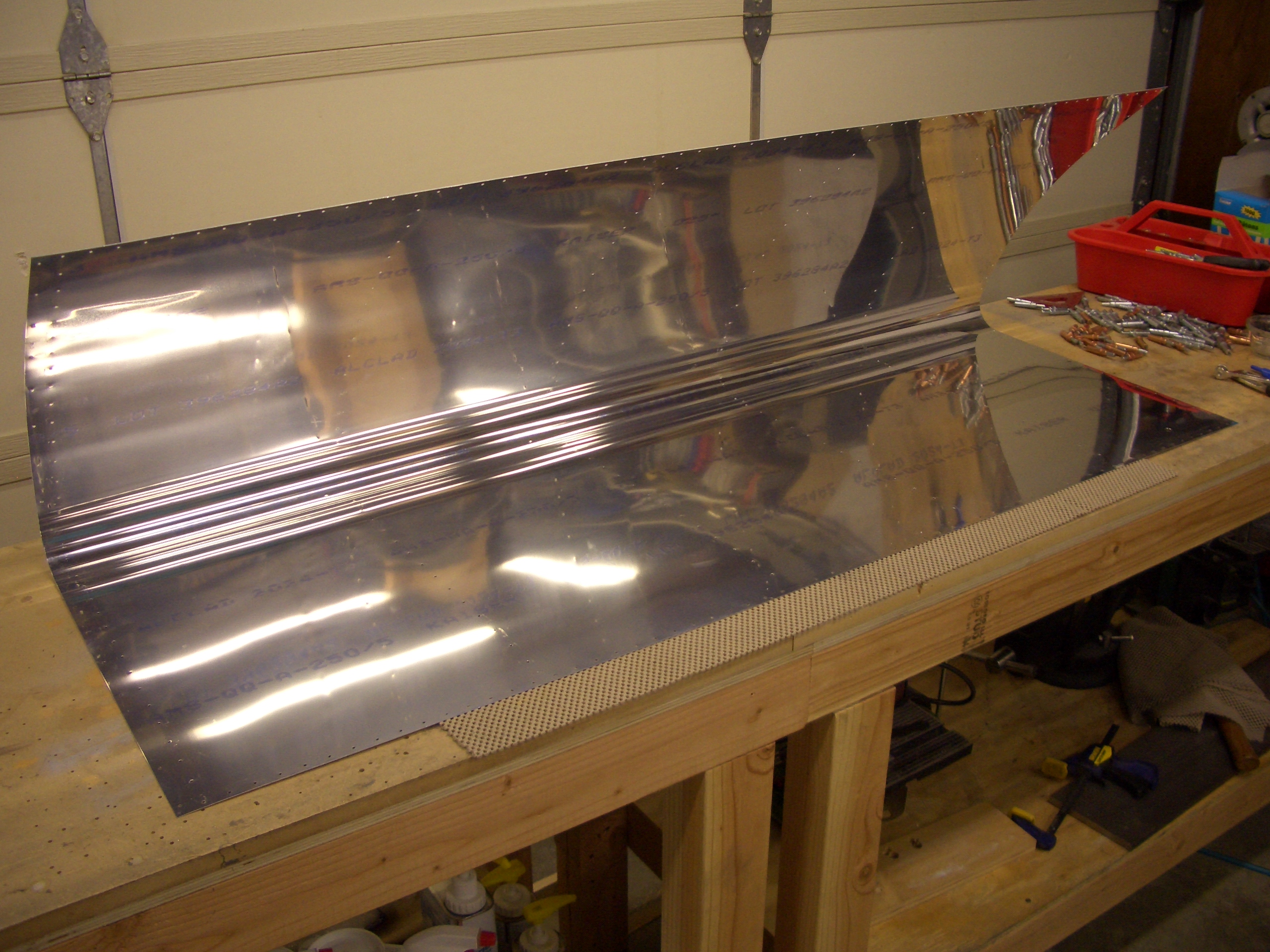
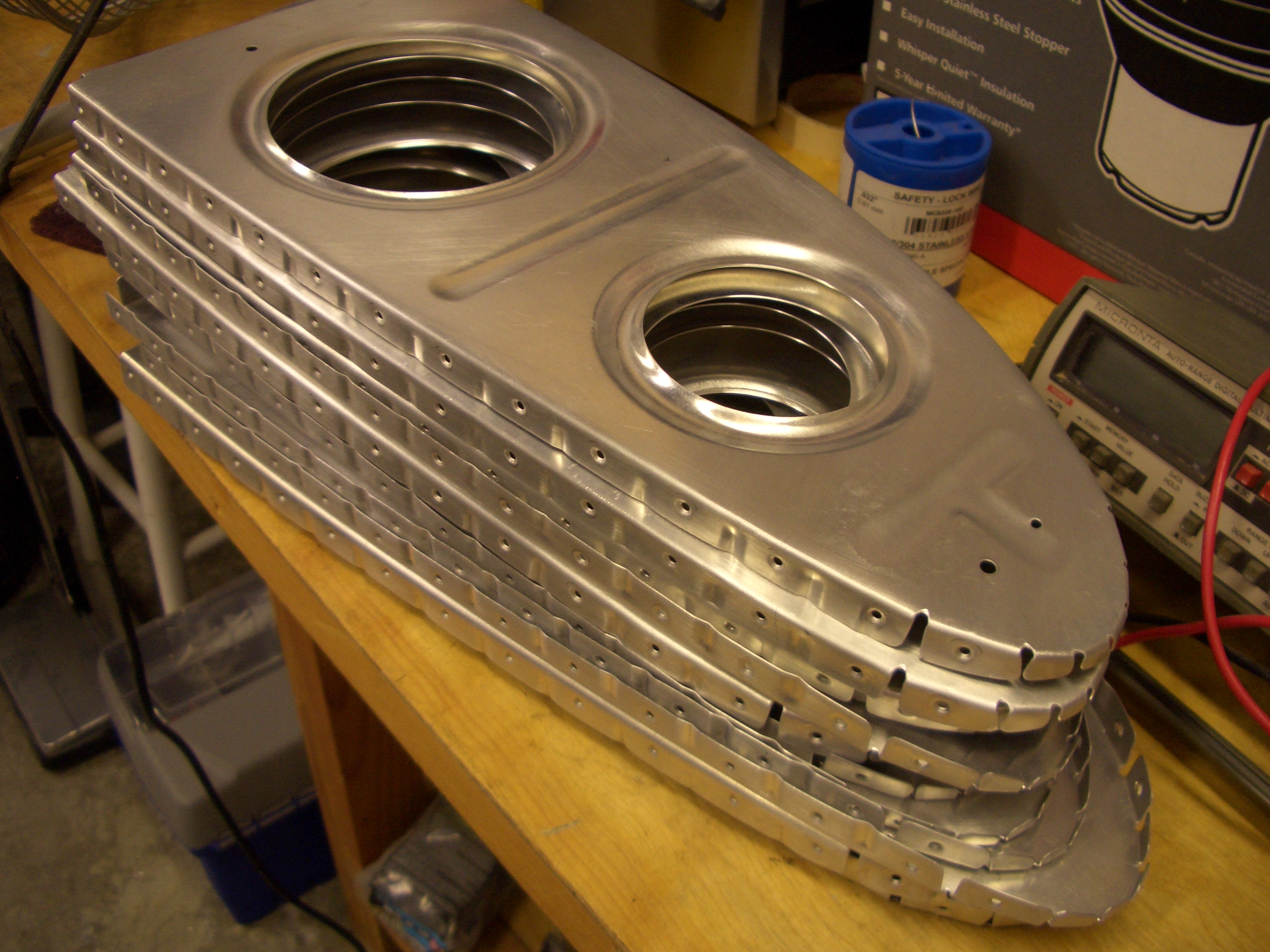
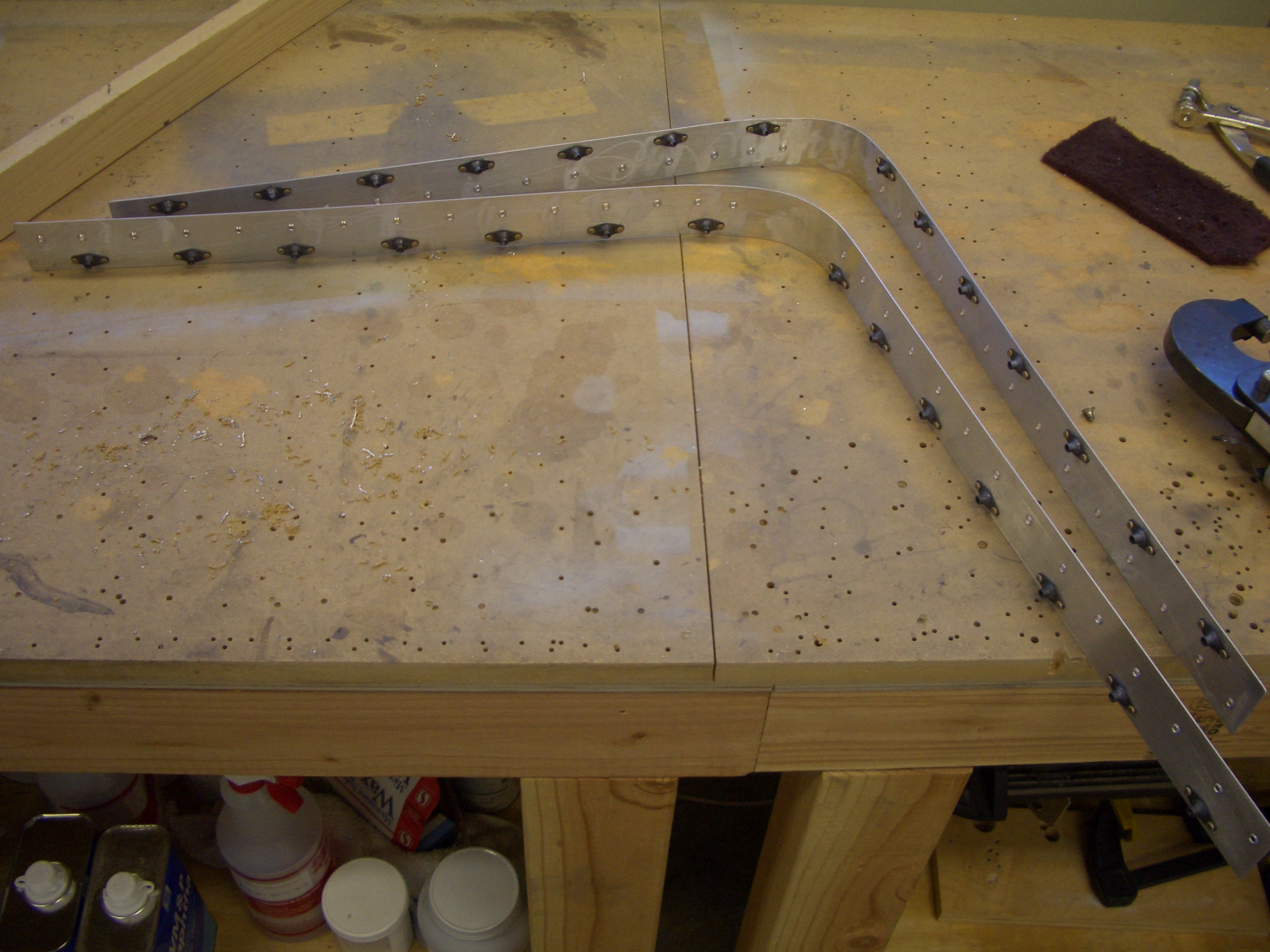
I got up early this morning before the kids were up to work on the plane a little.  It wasn’t enough time to get started on the fuel tanks, so I decided to fabricate these splice plates instead.  These will get riveted to the outboard leading edge wing skins and provide additional nutplates for the fuel tank to attach to.


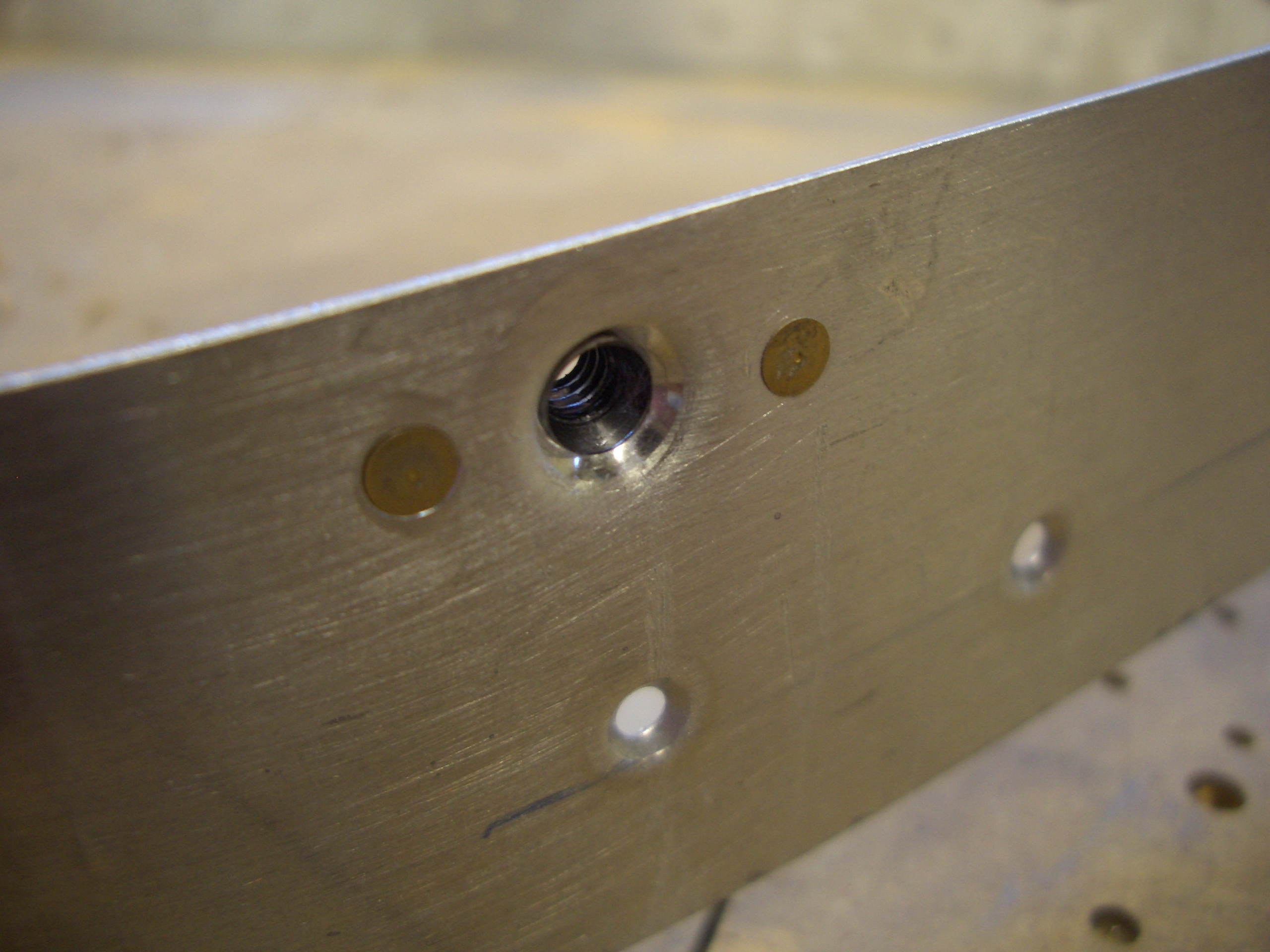
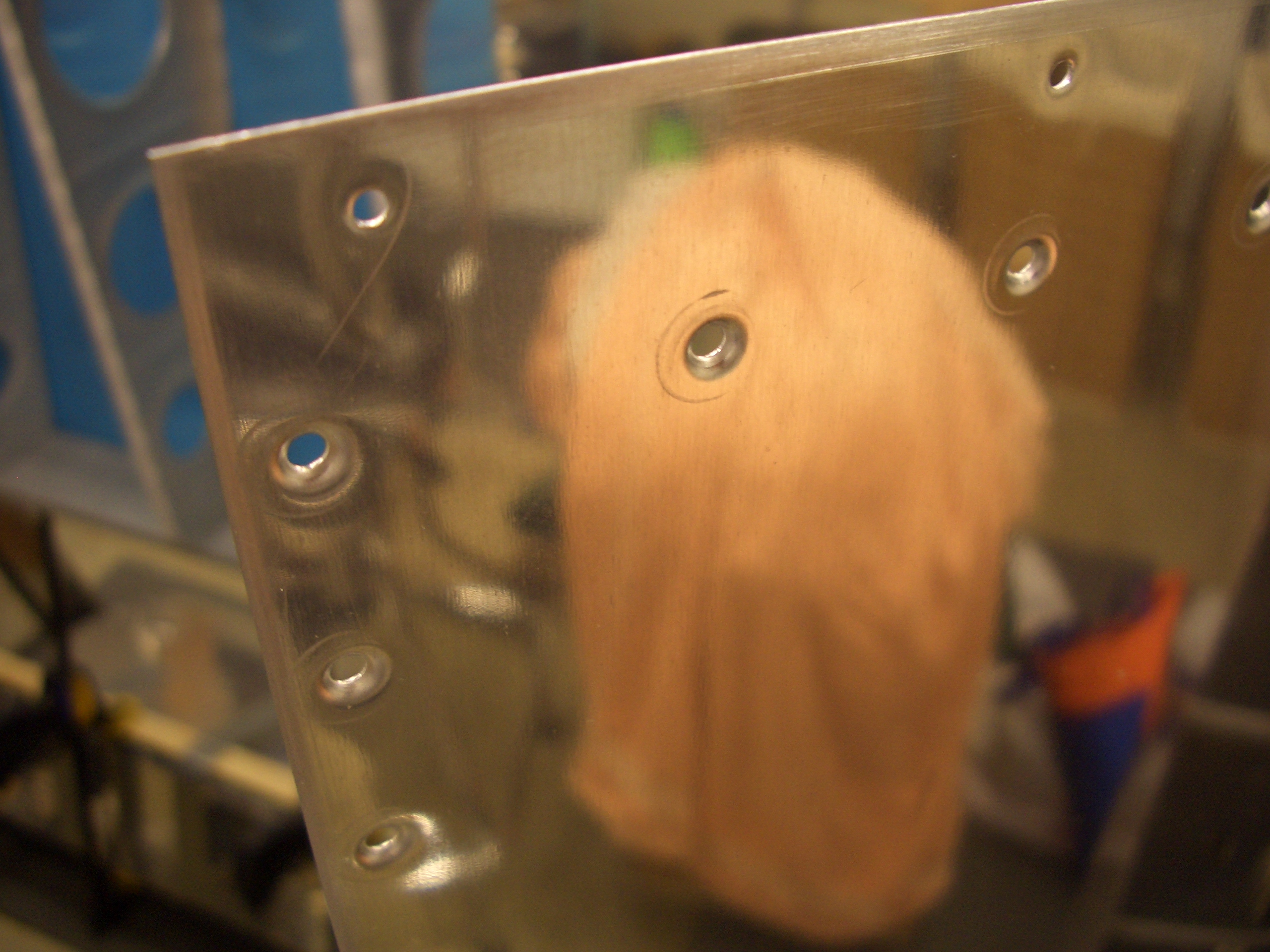
Here is a closeup of one of the nutplates.  The skin is dimpled here to accept the fuel tank dimples and #8 flush screws.


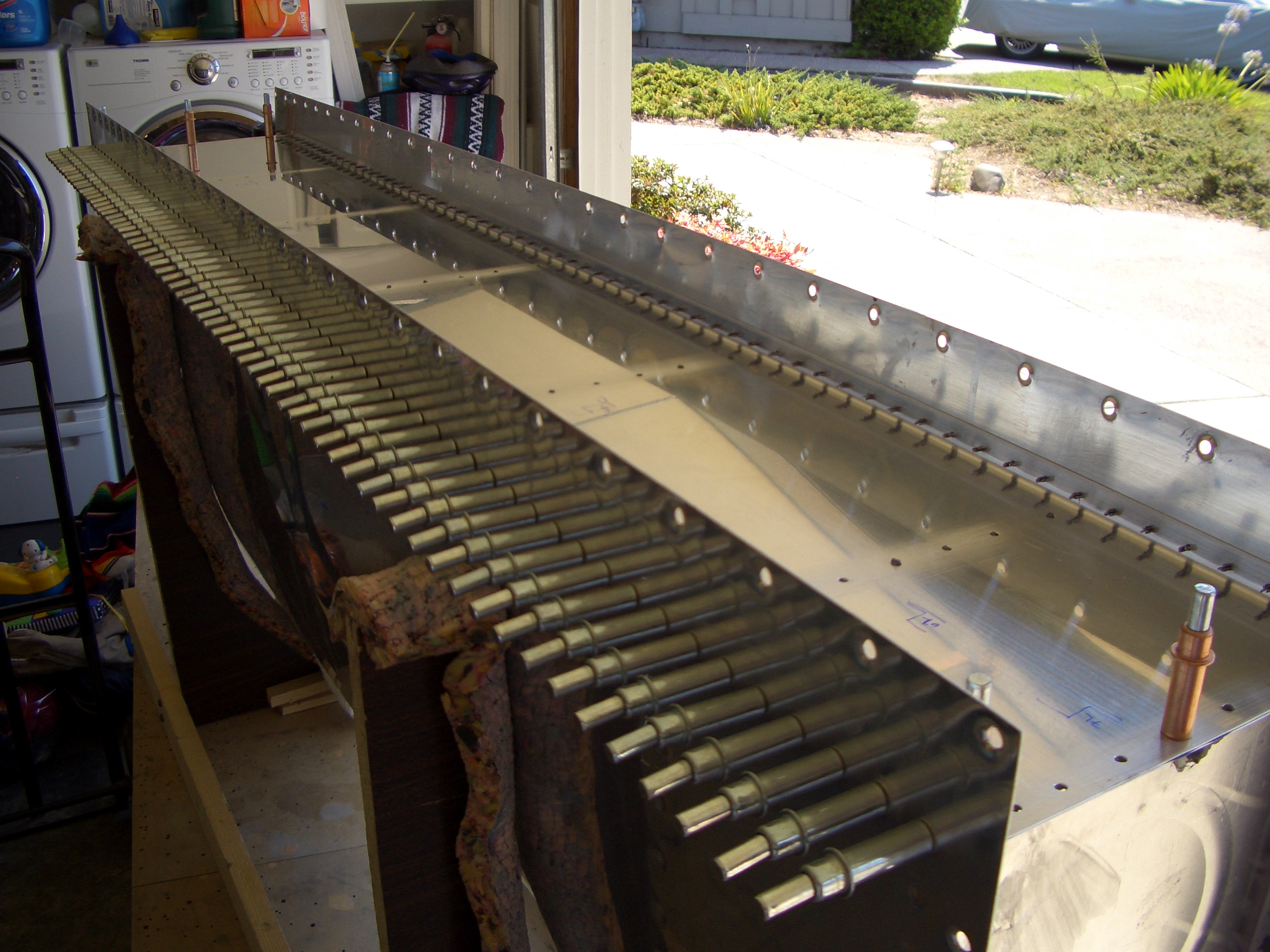
I didn’t get any pictures of how the sealant is applied, but I just followed Van’s instructions.  I applied a <3/16″ bead just ahead of the skin to baffle rivets (where the long row of silver clecos are below) as well as sealant around each of the rib to baffle rivets and along the outer ribs.  Next, I dropped the baffle into place and clecoed every skin to baffle hole to ensure a tight fit (I’m really glad I have the pneumatic cleco gun).


Next, the upper and lower rib to baffle holes are pop riveted.


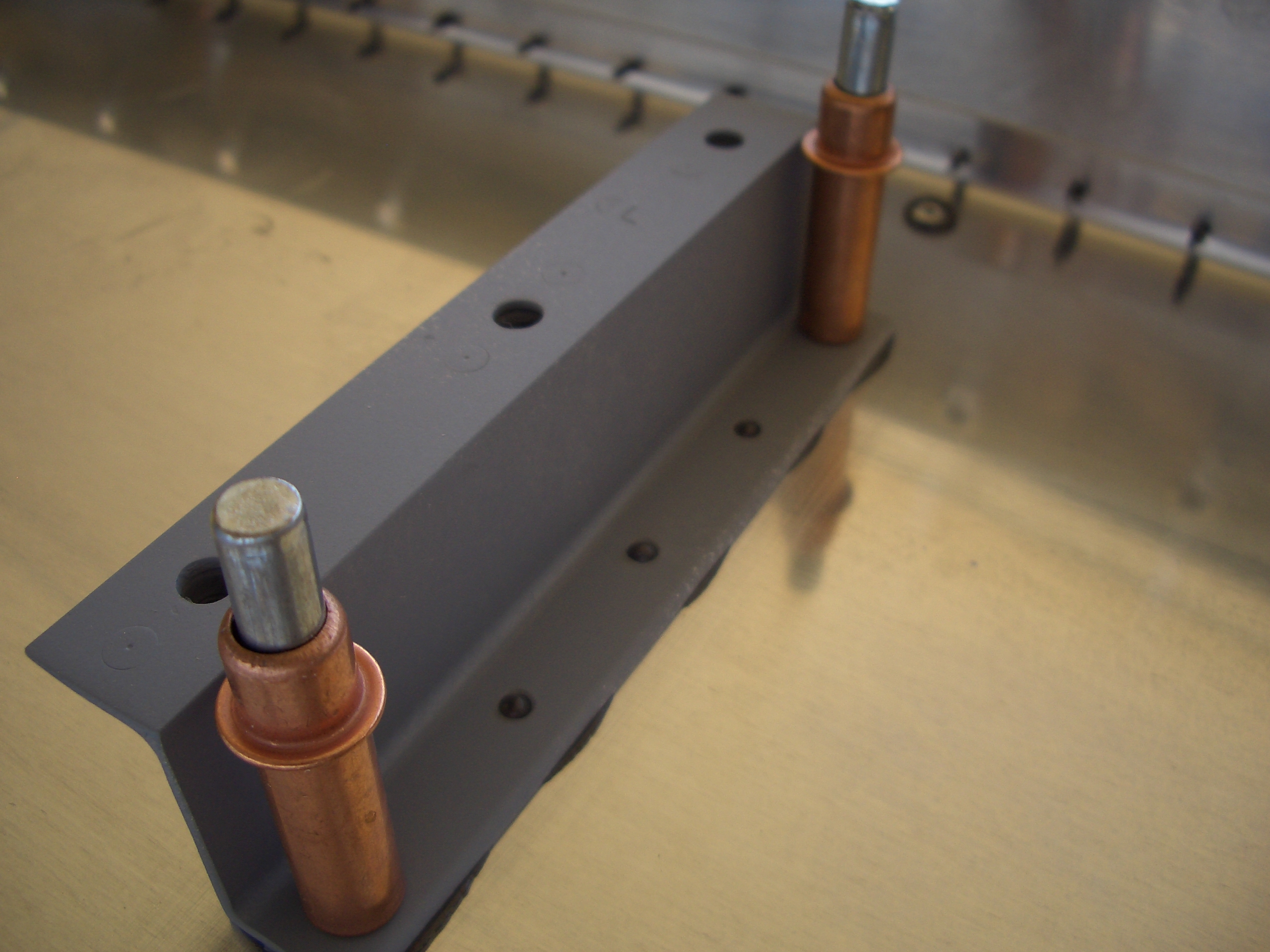
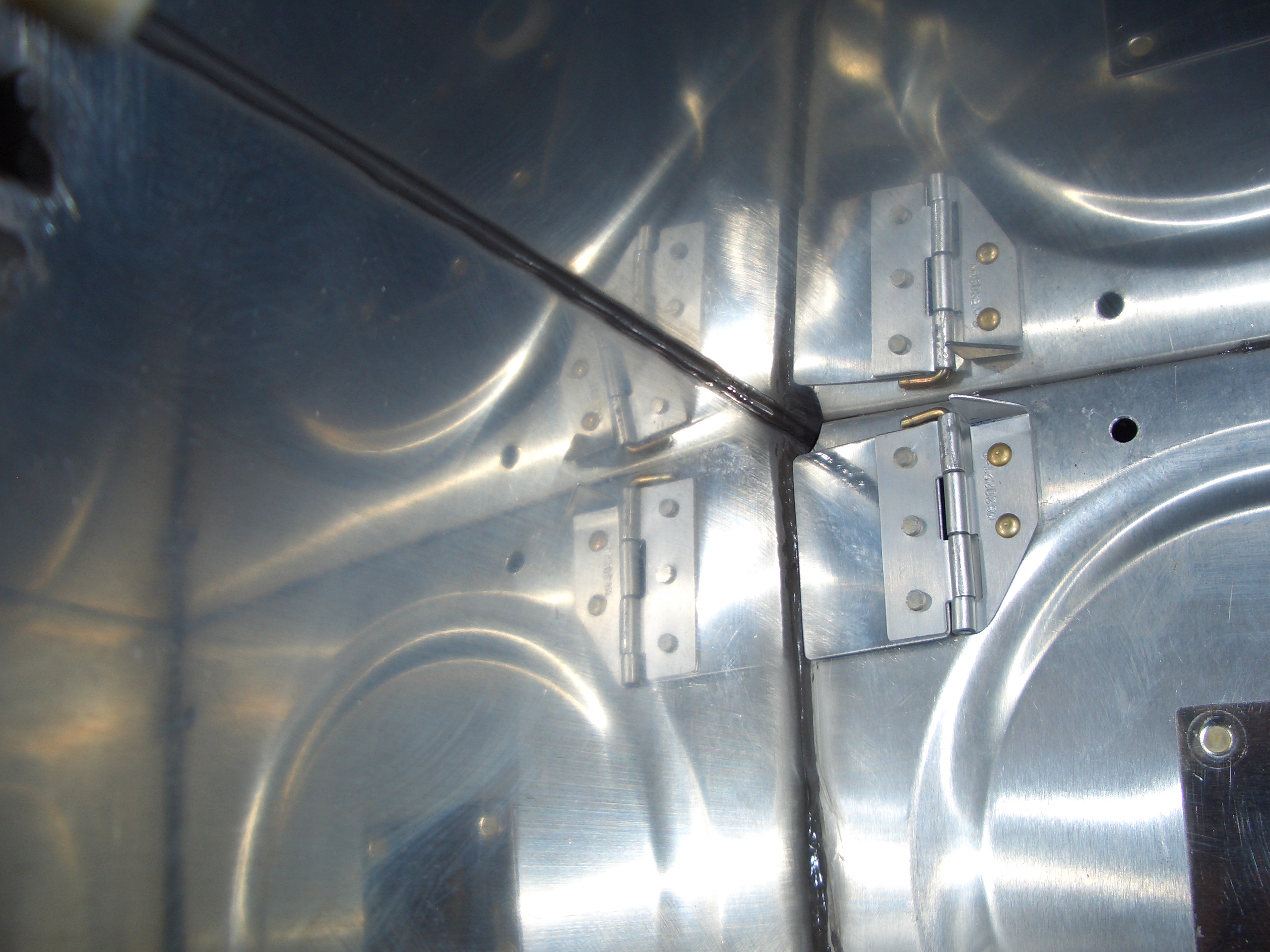
Then the z-brackets are pop riveted on.  Double check the orientation of each of these brackets because it varies and it would be really hard to change once they’re riveted on.  Just like other builders, I had to grind the nose of my crappy Harbor Freight pop rivet gun down to get to these pop rivets.


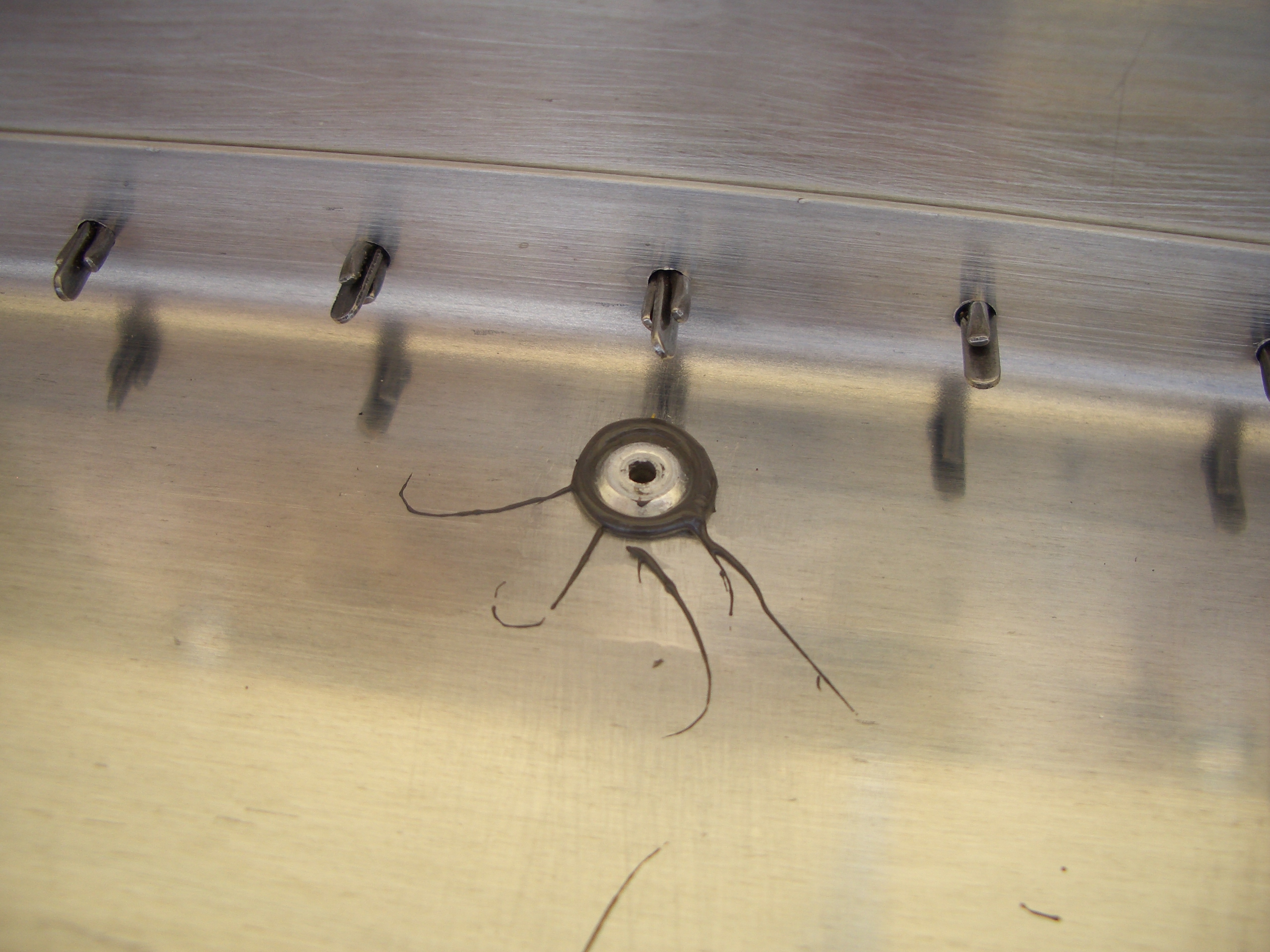
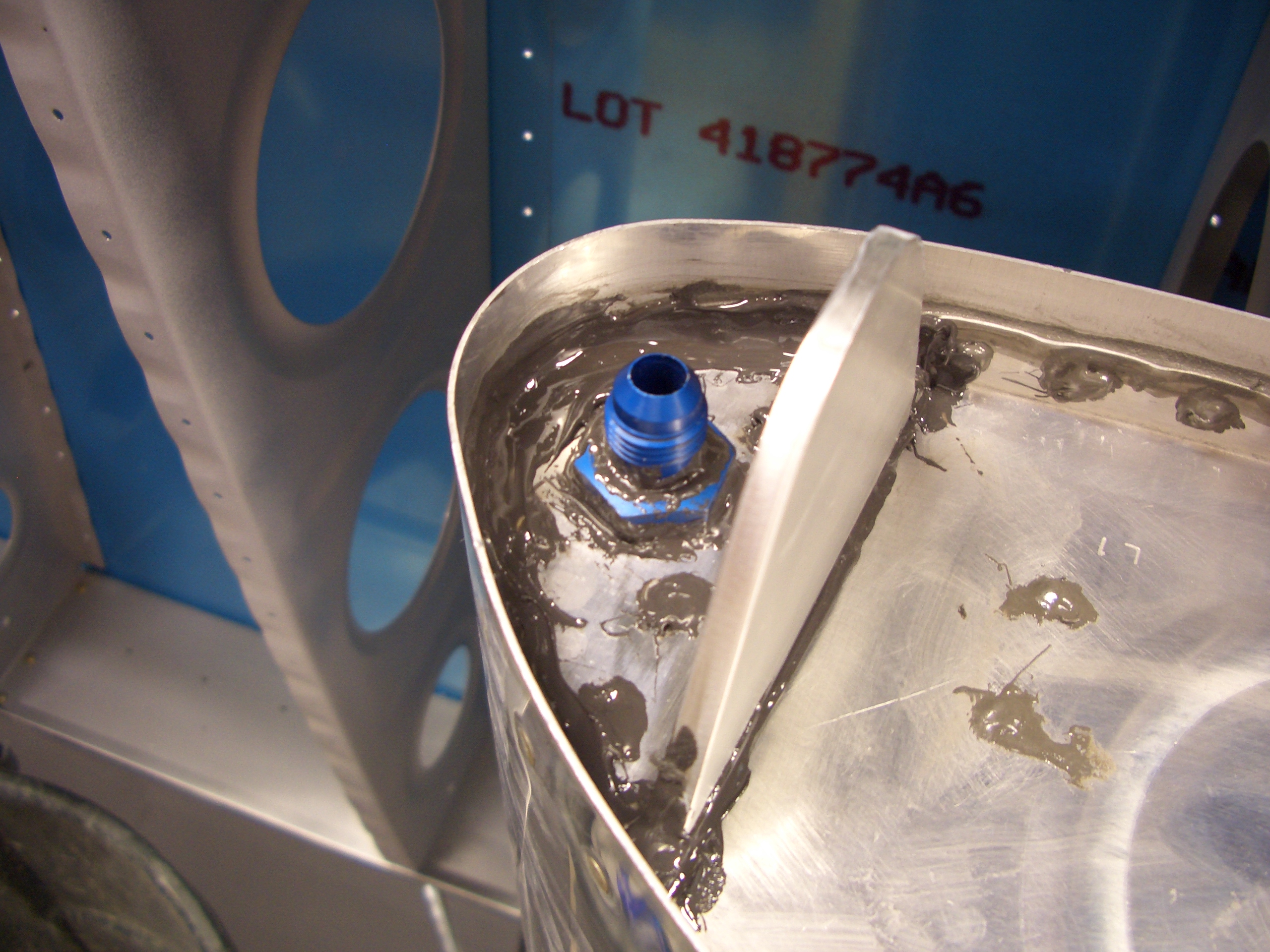
At the top of this picture, you can see the bead of sealant that gets formed when the baffle gets pushed into position.  I’m really glad I purchased a Semco sealant gun now.  It made it trivial to get a nice bead on the skin.


I came out into the garage a little later in the evening.  It was too late to get started sealing the other tank, so I took down one of the outboard leading edge skins and deburred it.  After finishing the tanks, these will be the next pieces to get riveted.

Sealed Right Fuel Tank

I sealed the right fuel tank tonight.  I didn’t take any pictures, but it would look pretty much exactly like the pictures from the left tank that I closed a few days ago.  I’m going to give everything at least a week to cure before leak testing the tank.  In the meantime, I can go ahead and get the outboard leading edges riveted and installed.

Finished Riveting Wing Leading Edges

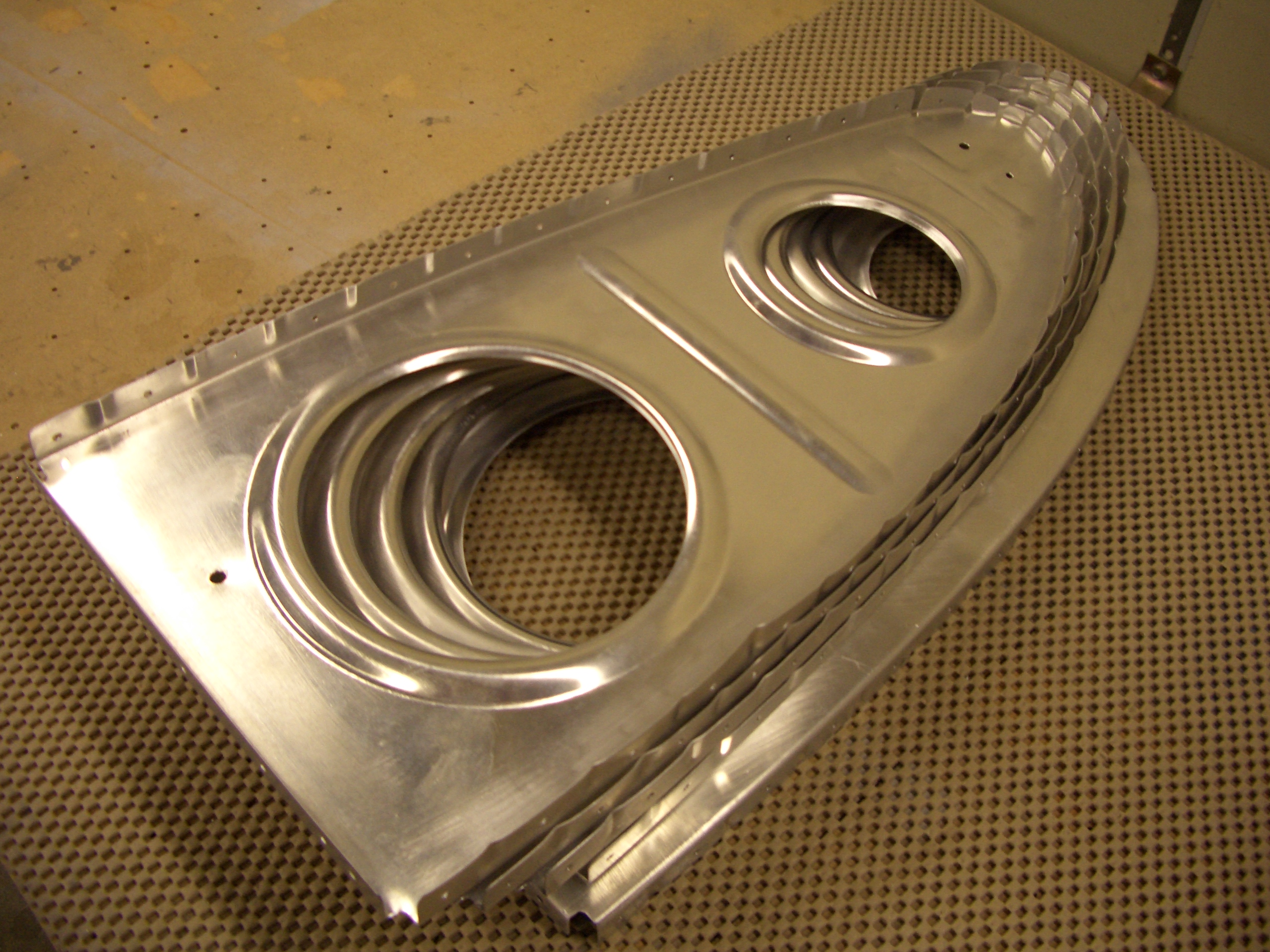
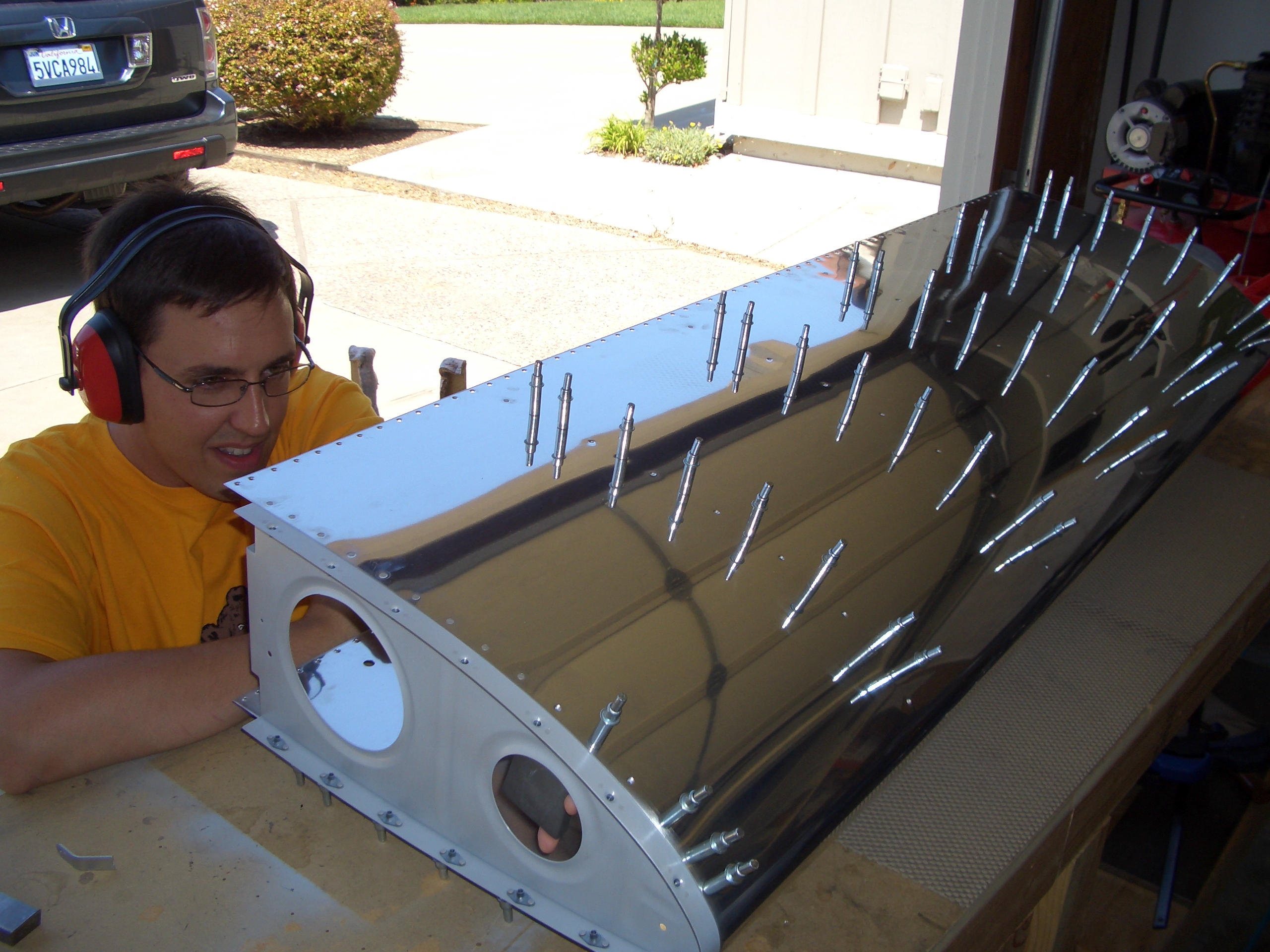
My buddy Andre stopped by today and helped me rivet the outboard wing leading edges together.  Here, we’re riveting the inboard rib which includes an extra strip of aluminum with nutplates to hold on the tank.  The plans called for AN426AD3-4 rivets, but -4.5 worked better.


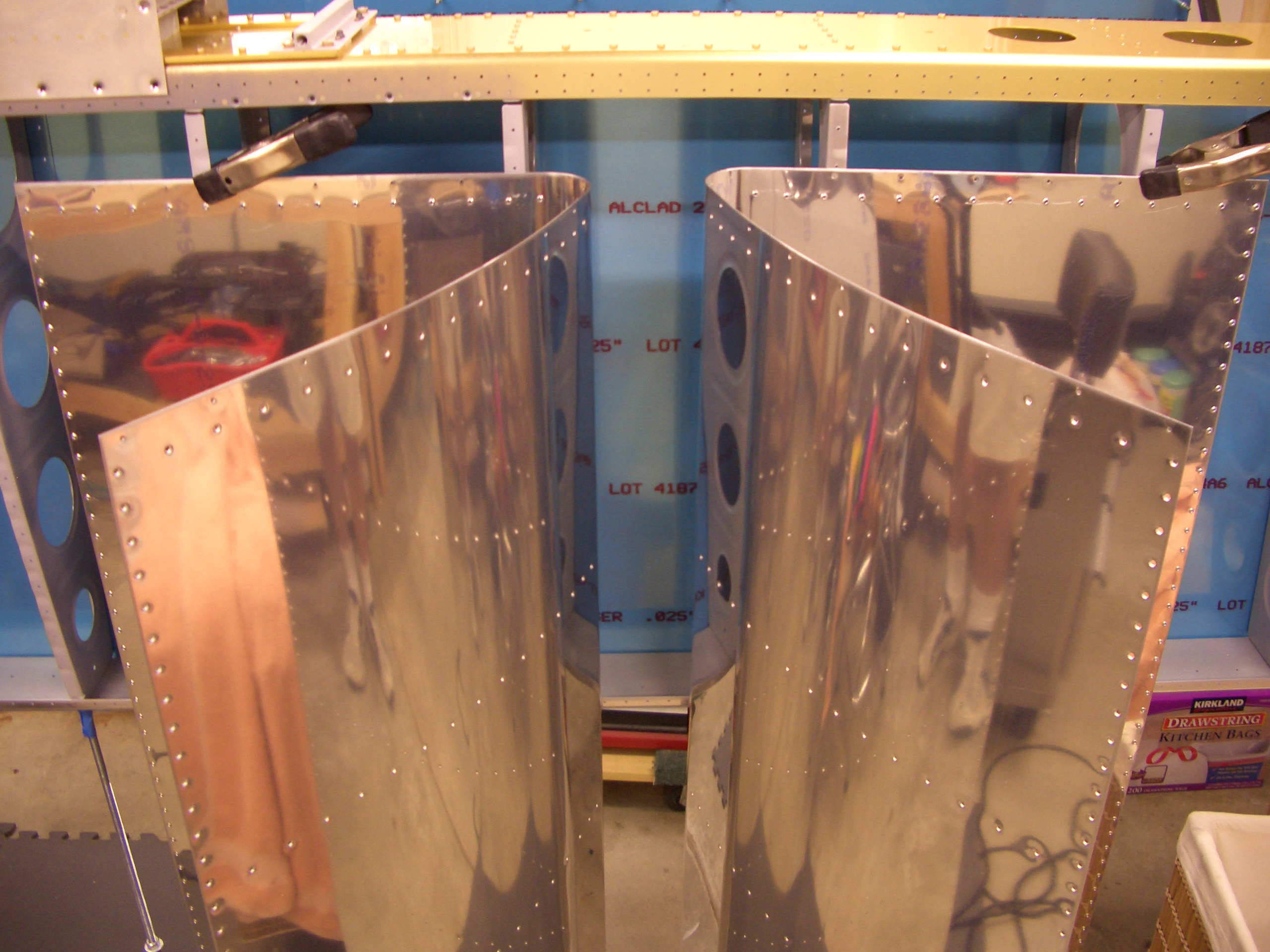
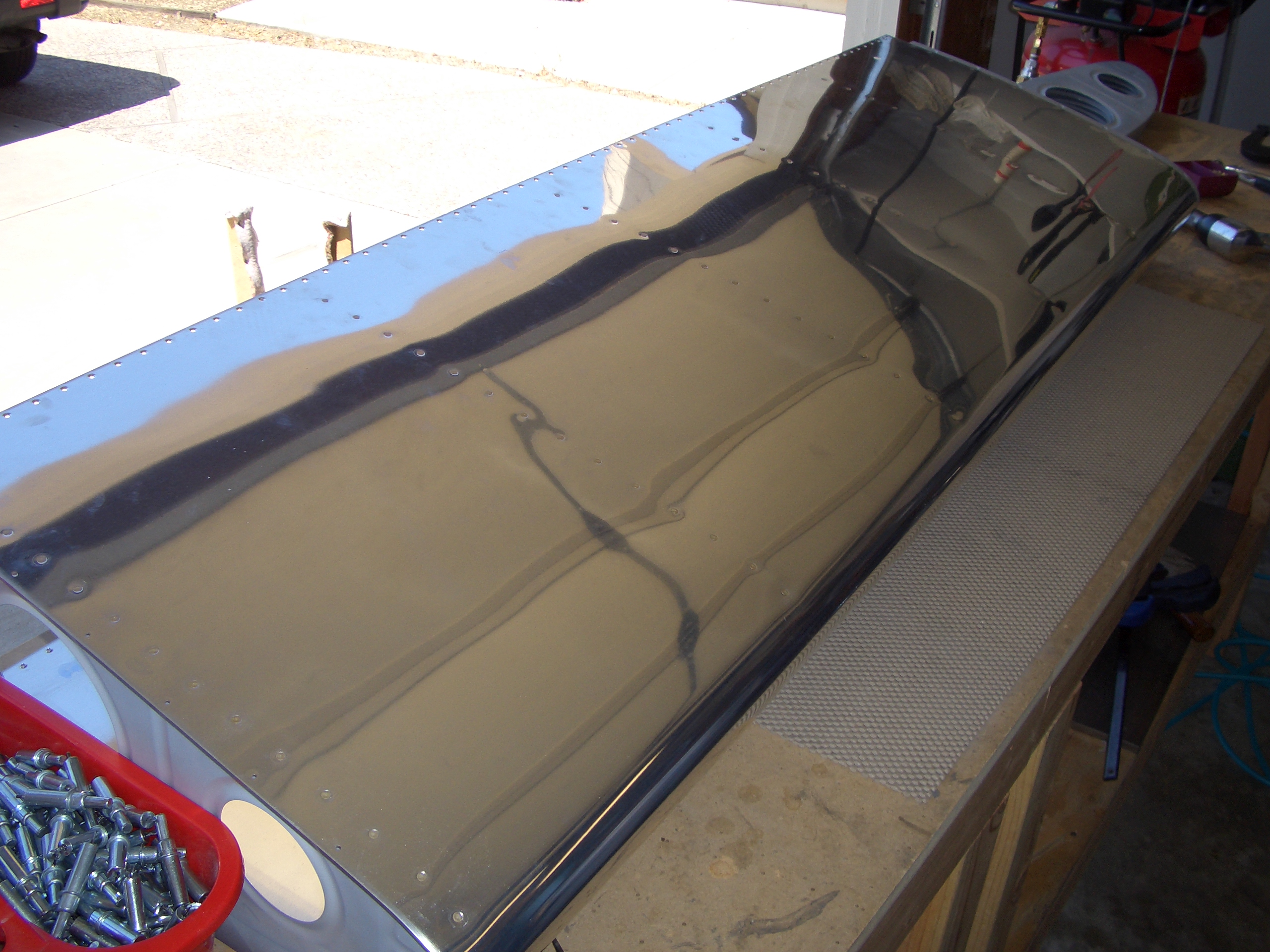
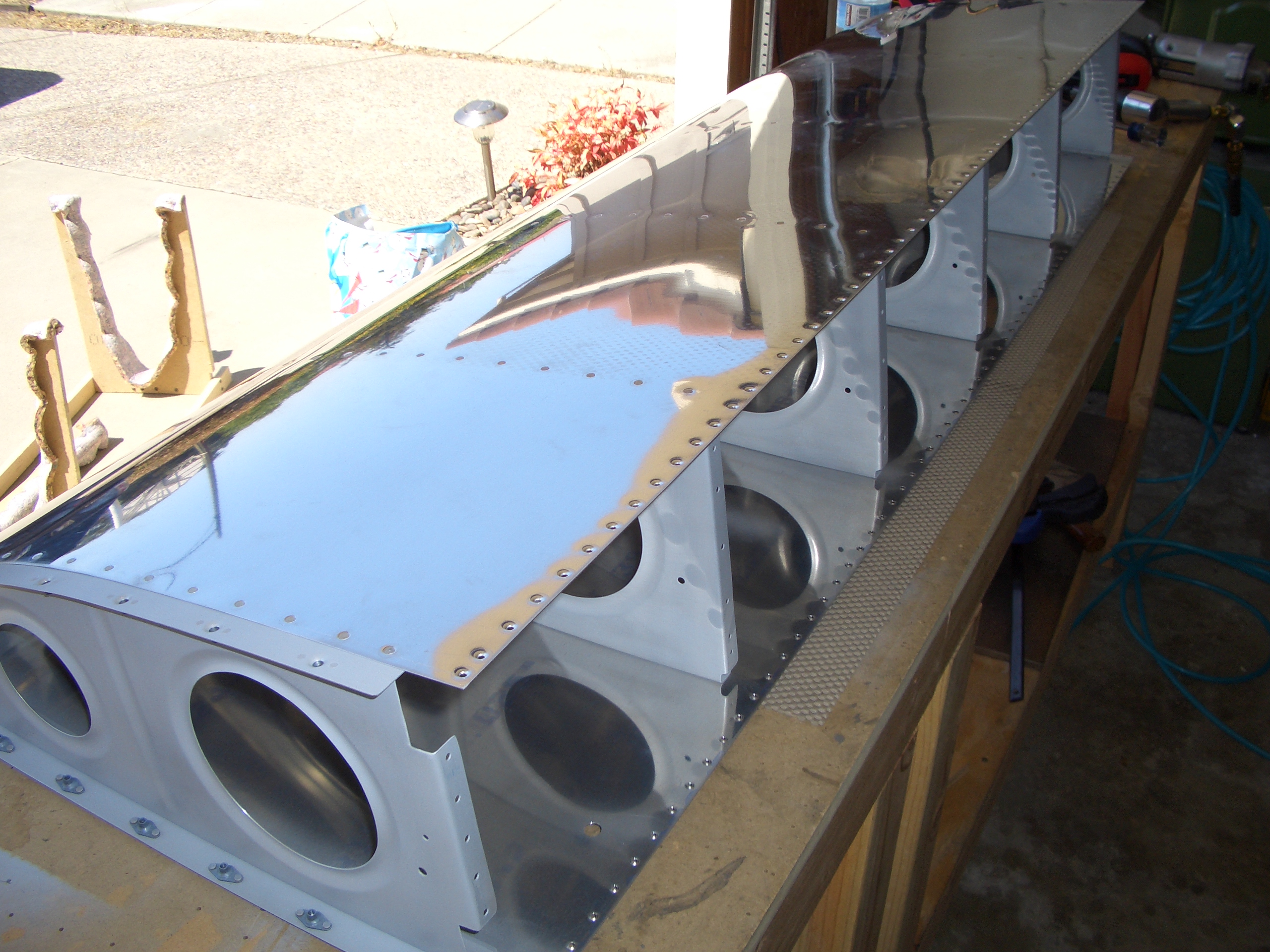
Here’s the completed left leading edge.


…and completed right leading edge.  I’m really enjoying getting back to basic aluminum work (without having to mess with tank sealant).  It’s nice how much faster structures like this go together.

Test Fit Tank to Leading Edge Joint

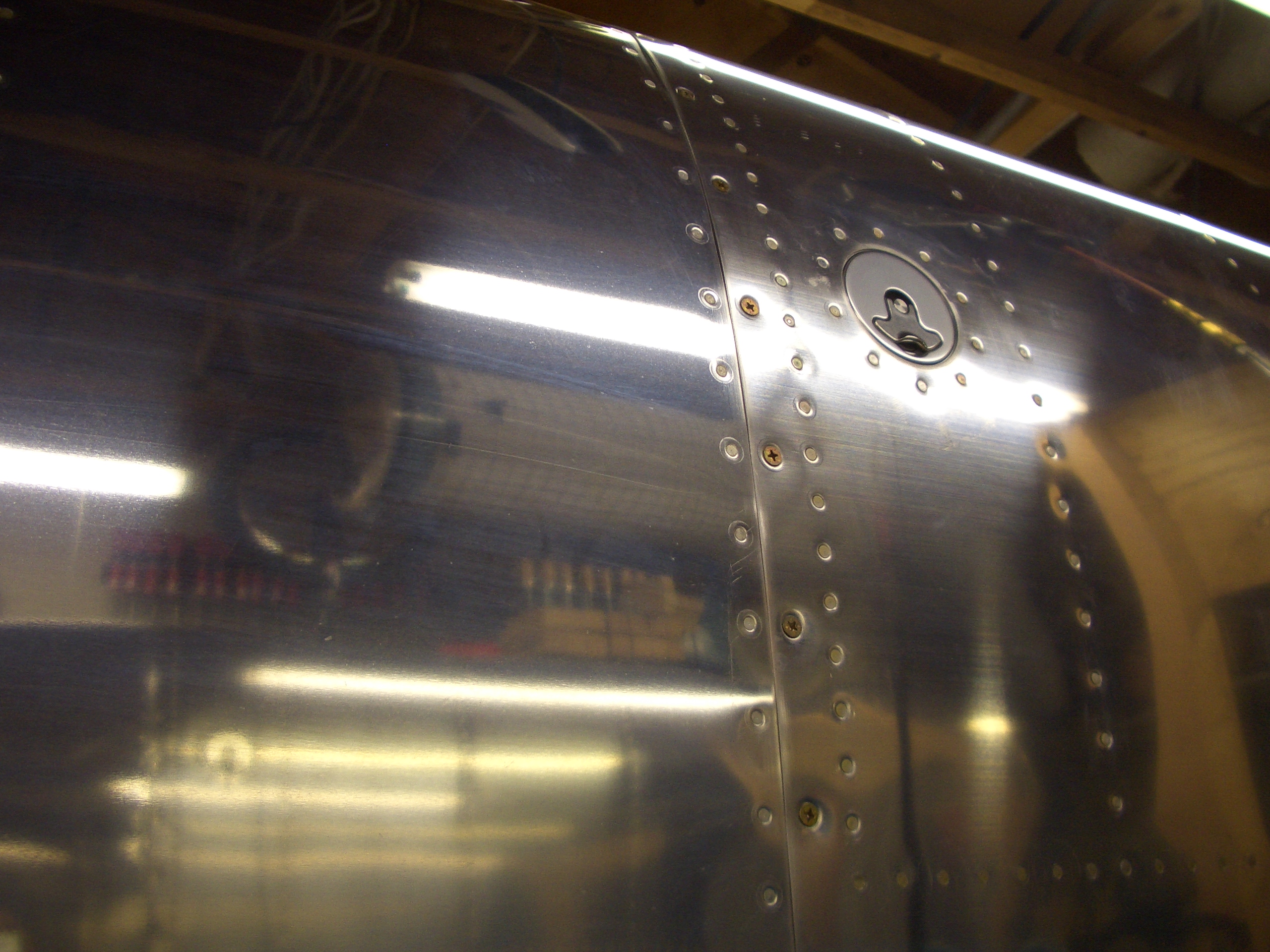
I installed the outboard leading edges and the tanks to evaluate the joint between the two.  First the good news: the gap between the two is virtually nonexistent and the leading edges align perfectly.


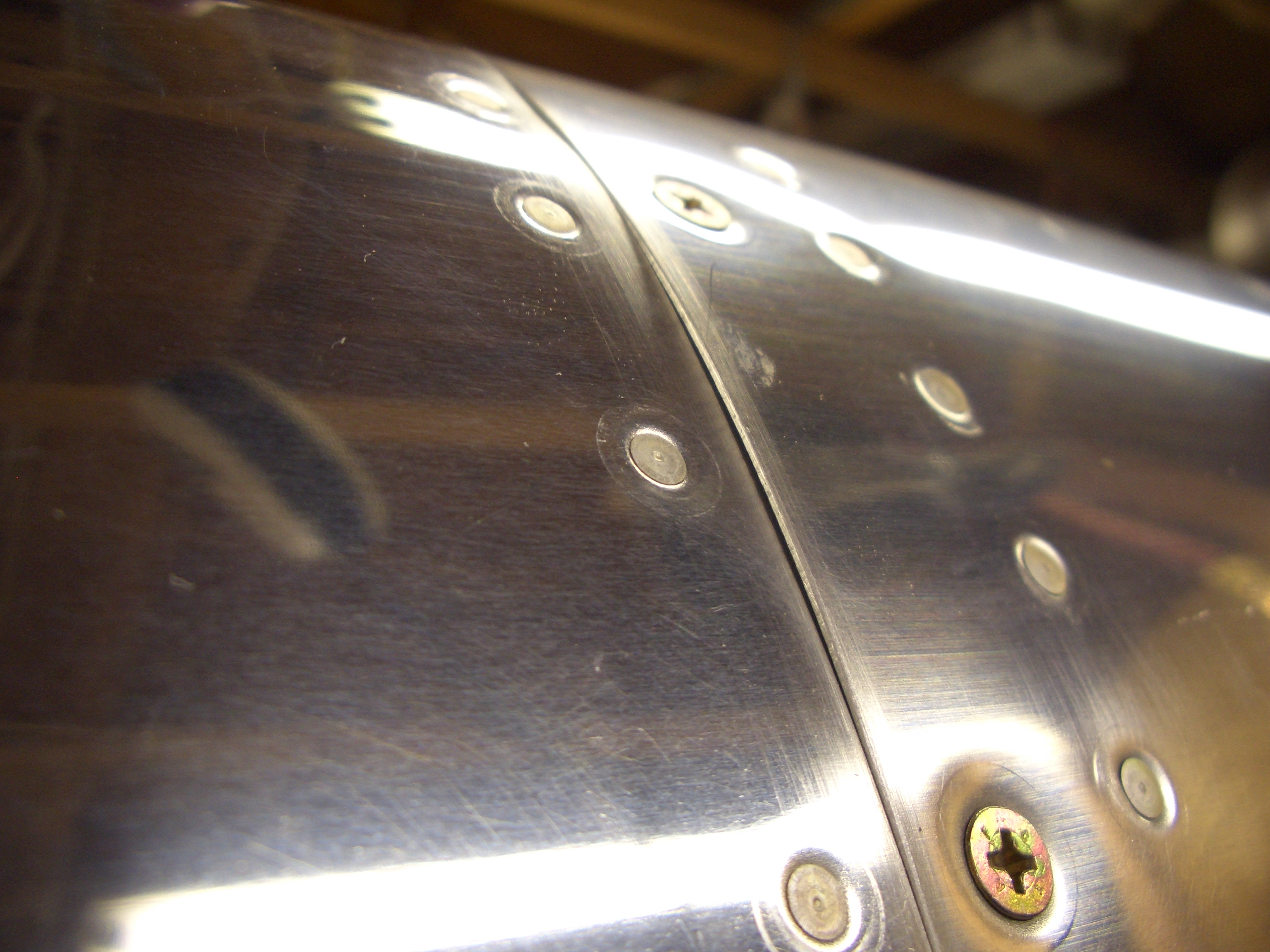
Now the bad news.  Like many people have encountered, the flushness of the two skins is rather poor.  I need to probably shim the outboard skins out a bit to bring them flush with the tanks.  The worst is about 0.042″, but there are several places that are over 0.020″.

Countersinking Spars

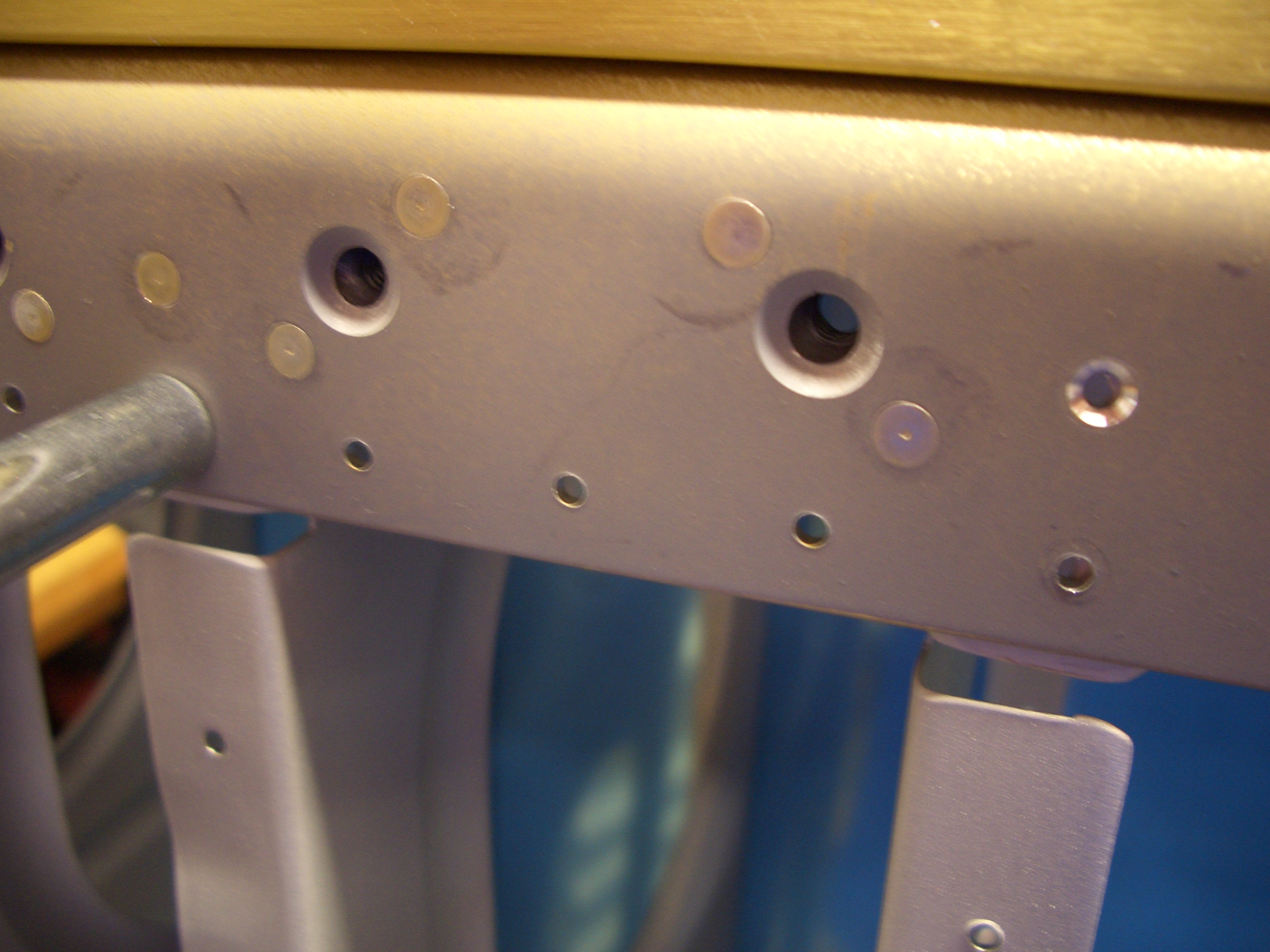
I started countersinking the spars for the rivets that will hold on the skins.  First up is to rivet the ribs to the spars using the forward holes in the tank attach section.  You can see one rivet set just above the cleco to the left and another countersink to the right that is ready to receive a rivet.  The plans don’t mention anything about these holes, but the tank will cover up this area, so it only makes sense to rivet these.


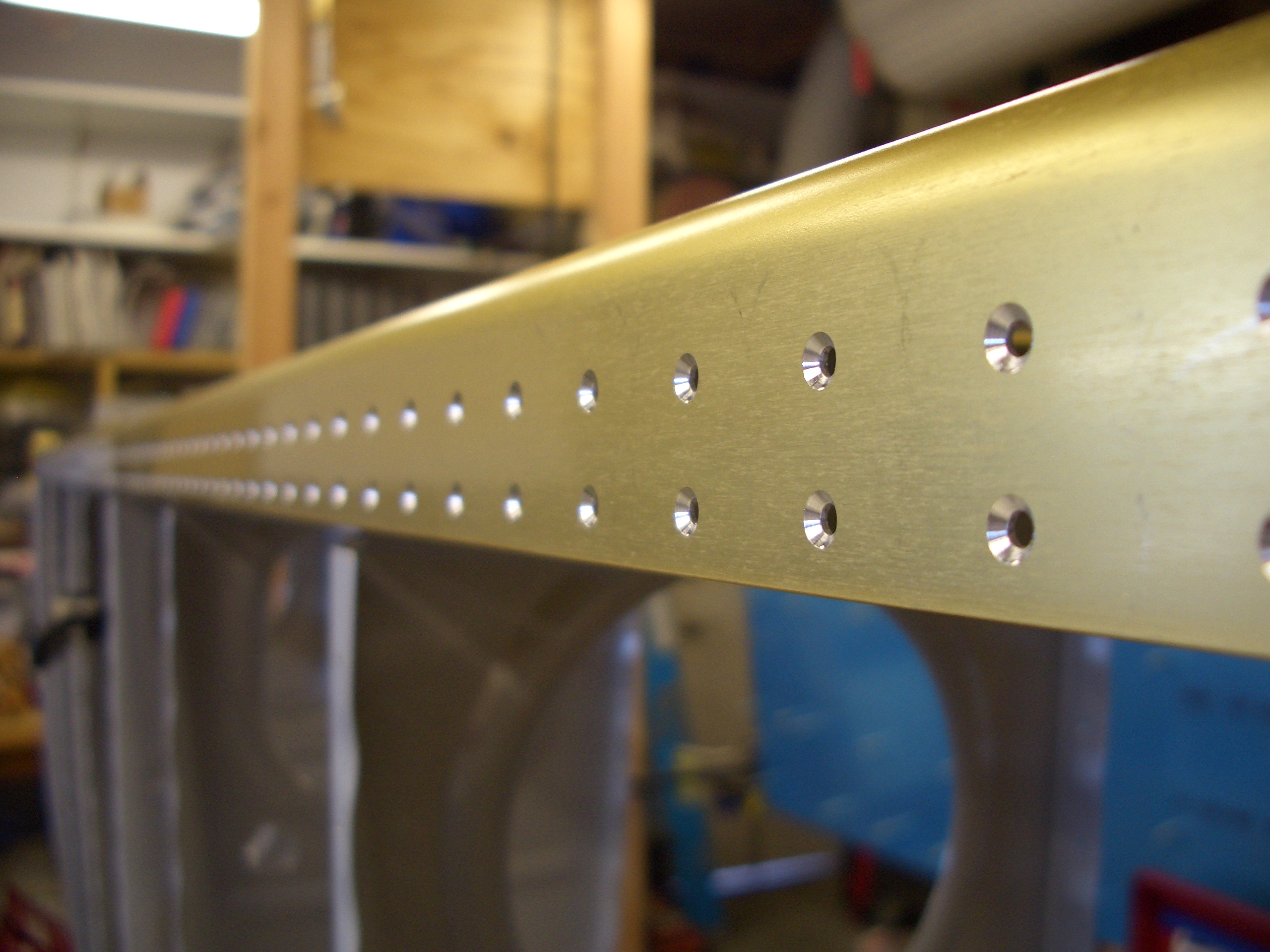
Here you can see all of the holes that must be countersunk along one side of one of the spars.  There are over 600 holes to countersink on both sides of both spars.  I’ll shoot some primer on these before riveting everything together.

.